

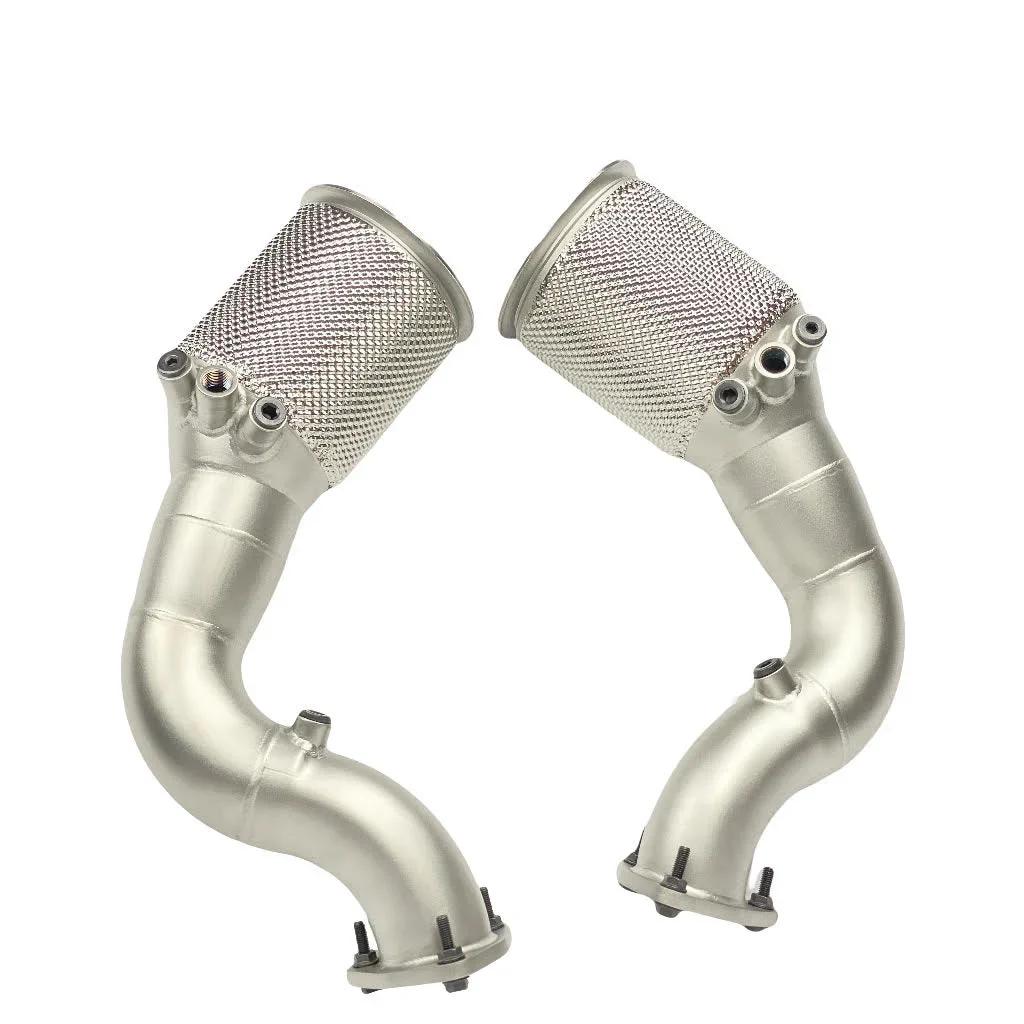
Audi RSQ8 SQ7 Downpipes and BMW M5 G90/G99 Touring Downpipe System
Modern performance vehicles are engineered to deliver impressive power while maintaining comfort, refinement, emissions control, and everyday usability. For enthusiasts who want to further personalize their driving experience, the exhaust system is often an important area for upgrades. Downpipes play a key role because they direct exhaust gases away from the turbocharger and into the rest of the exhaust system. Two popular performance applications are Audi RSQ8 and SQ7 downpipes and BMW M5 G90/G99 Touring systems.
Understanding the Role of a Downpipe
A downpipe is positioned directly downstream of the turbocharger. It handles extremely hot exhaust gases and therefore needs to withstand substantial thermal stress, vibration, and pressure. Its internal design and tubing geometry can influence how efficiently exhaust gases travel through the system.
Factory downpipes are developed to balance performance with emissions regulations, noise requirements, durability, and comfort. Performance-focused aftermarket products may feature smoother bends, optimized tubing, high-quality materials, and carefully designed connection points. The actual effect of an upgrade depends on the complete exhaust system and supporting modifications.
Audi RSQ8 and SQ7 Performance Upgrades
The Audi RSQ8 and SQ7 combine powerful turbocharged engines with advanced drivetrains, making them popular choices for enthusiasts who want luxury without sacrificing performance. A properly designed exhaust upgrade can complement the vehicle's existing powertrain and provide a more performance-focused character.
For enthusiasts considering audi rsq8 sq7 downpipes , vehicle-specific engineering is especially important. The component should be designed around the vehicle's factory mounting points, sensor positions, heat shielding, and available space. Accurate fitment can make installation easier while reducing the possibility of unwanted contact with nearby components.
Depending on the complete exhaust configuration, an aftermarket downpipe may contribute to changes in exhaust sound and throttle response. Results vary according to the specific vehicle, calibration, and other modifications.
BMW M5 G90 and G99 Touring
The latest BMW M5 generation offers a powerful combination of performance, technology, and practicality. The G90 sedan and G99 Touring provide enthusiasts with a sophisticated platform for carefully planned exhaust modifications.
A complete downpipe system for bmw m5 g90 / g99 touring can provide a coordinated approach to upgrading the exhaust pathway. Rather than replacing isolated components, a complete system can be designed around consistent tubing geometry, connections, sensor locations, and vehicle-specific clearances.
This type of setup may be particularly appealing to owners building a comprehensive performance exhaust system. Proper compatibility should always be confirmed according to the exact vehicle specification and model year.
Catted and Catless Considerations
Depending on the application, aftermarket downpipes can be available with or without catalytic converters. Catted configurations retain emissions-control components and may offer a compromise between exhaust-flow improvements and emissions requirements.
Catless configurations provide a less restricted exhaust path but can increase emissions and may not be legal for public-road use in some regions. Before making a purchase, owners should verify local emissions, inspection, and noise regulations.
Material and Manufacturing Quality
Because downpipes operate under extreme conditions, material quality is an important consideration. Stainless steel is commonly used because it provides good resistance to heat and corrosion. High-quality welds, precise bends, accurate flanges, and correctly positioned sensor ports can contribute to durability and dependable fitment.
A vehicle-specific design is generally preferable to a universal component because it takes the original exhaust layout into account.
Professional Installation
Installing downpipes can be technically demanding because turbochargers, heat shields, oxygen sensors, and other components may be located in tightly packaged areas. Professional installation helps ensure that connections are secure and components maintain proper clearances.
After installation, the exhaust system should be inspected for leaks and correct sensor placement. This is particularly important for high-performance vehicles that operate under significant thermal and mechanical stress.
Supporting Modifications
Downpipes should be considered as part of the vehicle's complete performance setup. Other exhaust components, intake modifications, and software calibration can affect the final results.
Where legally permitted, professional tuning may be appropriate after substantial exhaust modifications. Calibration should prioritize reliability, safe temperatures, appropriate fueling, and long-term drivability.
Conclusion
A high-quality downpipe can be a valuable component of a performance-focused exhaust upgrade. Whether enhancing an Audi RSQ8 or SQ7 or developing a complete system for the BMW M5 G90/G99 Touring, enthusiasts should prioritize precise fitment, durable construction, professional installation, and legal compliance. A carefully planned exhaust upgrade can complement the vehicle's factory engineering while creating a more engaging and personalized driving experience.